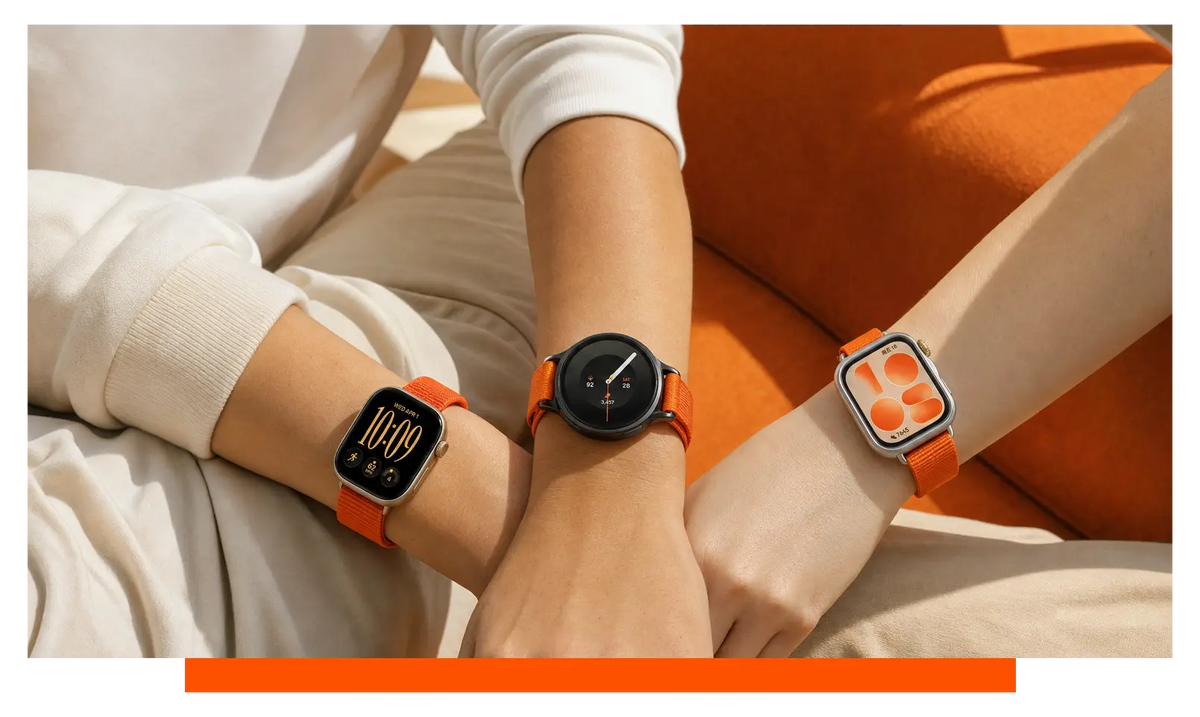


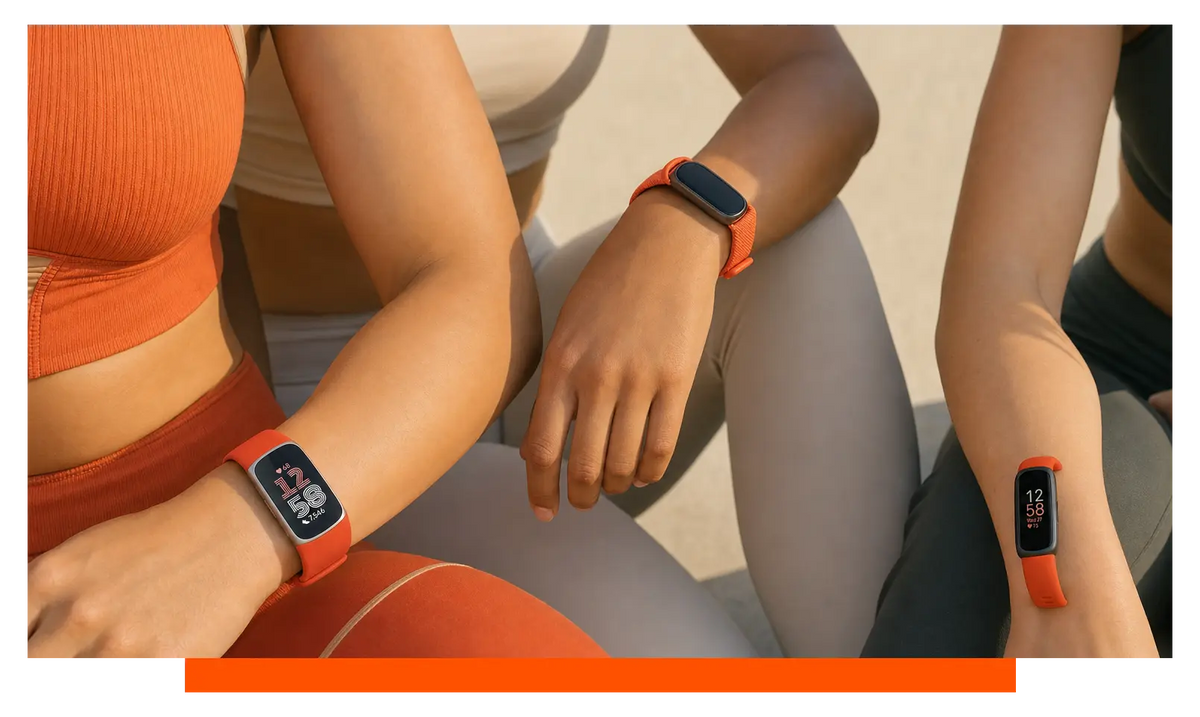
Fitbit Charge 6 is the best Fitbit for fitness because it puts live workout stats, controls and built-in GPS into a compact tracker. Choose Fitbit Air for screen-free passive tracking, Inspire 3 for lighter everyday wear and longer battery life, or Versa 4 when a larger watch-style display matters more during exercise.
The best Fitbits for fitness at a glance
The four models divide neatly by how much information you want on your wrist, with Charge 6 offering the strongest balance for active exercise.
| Fitbit | Best for | Workout screen | GPS | Battery life | Weight | Made of |
|---|---|---|---|---|---|---|
| Google Fitbit Air | Passive health and sleep tracking | No display | Connected GPS | Up to 7 days | 12 g | Recycled polycarbonate/PBT, textile and steel |
| Fitbit Charge 6 | Phone-free outdoor workouts | 1.04-inch AMOLED with real-time stats | Built-in GPS | Up to 7 days | 30 g | Aluminium and silicone |
| Fitbit Inspire 3 | Everyday health basics | AMOLED with live feedback | Connected GPS | Up to 10 days | 17.69 g | Silicone and plastic |
| Fitbit Versa 4 | Large-screen tracking | 40.5 mm AMOLED with real-time stats | Built-in GPS | 6 days | 37.64 g | Aluminium and silicone |
The deciding issue is whether you need to see and control workout information on your wrist, rather than reviewing it on your phone later.
What makes a good Fitbit for fitness?
The best Fitbit for fitness gives you enough live information for your training without becoming uncomfortable during exercise, sleep or everyday wear.
Workout screen experience
A screen lets you start and pause a workout, then glance at live information without reaching for your phone. That matters when you pace runs, monitor gym sessions or want feedback while moving; it matters much less if you prefer tracking to happen quietly in the background.
GPS type and recording time
Built-in GPS records an outdoor route without a phone, making it the practical choice for runners, walkers and cyclists who want to travel light. Connected GPS can still capture route, pace and distance, but only while the tracker remains near a compatible phone.
Recording time matters too. A tracker that handles ordinary runs comfortably may still fall short during an all-day walk, long ride or endurance event, so GPS battery life deserves more attention than general standby time if you train outdoors.
Size, weight and sensor contact
A lighter, narrower tracker is usually easier to forget during sleep and less likely to catch on clothing. A larger face is easier to read mid-workout, though it takes up more wrist space.
Whatever shape you choose, wear it above the wrist bone and snug enough that it does not slide during exercise. Dry the band after sweating or swimming: comfort matters, but stable skin contact also helps the optical sensor collect cleaner heart-rate data.
Strap material
The supplied band affects the watch from the first workout, but it does not lock you into one feel. Silicone is straightforward around sweat and water, while textile or nylon can feel less rigid for long wear. Leather, Milanese and metal alternatives are better considered around your routine, skin and clothing than as upgrades to fitness tracking itself.
Best for distraction-free tracking - 1. Google Fitbit Air
Google Fitbit Air is the right choice if you want health and activity tracking to disappear beneath a sleeve or sit beside a traditional watch. There is no workout screen, so it detects activity automatically and sends live workout information to your phone rather than putting controls on your wrist.
- Case: 34.9 × 17 × 8.3 mm
- Weight: 12 g with its band
- GPS: connected through a nearby phone
- Battery: up to 7 days
- Included material: recycled polycarbonate/PBT, textile and steel
Its low weight makes it the easiest option here to forget during sleep. The trade-off is equally clear: if you rely on live pace, heart rate or elapsed time while training, looking at a phone breaks the otherwise discreet experience.
The supplied textile band sets Air apart, although compatible Fitbit Air straps are also available in silicone, nylon, leather, Milanese and metal. That breadth is useful if the original feel suits sleep but not sweaty training, or vice versa.
At the time of writing, Google Fitbit Air costs £84.99.
Best overall - 2. Fitbit Charge 6
Fitbit Charge 6 is the best fitness-first model because it combines a compact tracker shape with the live controls and built-in GPS active exercisers are most likely to use.
- Display: 1.04-inch AMOLED
- Workout experience: real-time stats and on-wrist controls
- GPS: built in, with up to 5 hours of continuous recording
- Exercise selection: 40+ modes
- Weight: 30 g
- Included material: aluminium and silicone
You can leave your phone behind for an outdoor workout, monitor information as you move and share live heart-rate data with compatible gym equipment or apps. That combination makes Charge 6 more useful during exercise than a passive tracker, without asking you to wear a full watch-sized case.
The GPS limit is enough for many runs, rides and gym-to-outdoor sessions, but it is the main caution for endurance training. If your recorded outings regularly exceed that window, Versa 4 gives you more room.
Charge 6 arrives with silicone, but the available Fitbit Charge 6 straps also include nylon, leather, Milanese and metal. A nylon option can change the everyday feel without giving up the compact case, while silicone remains the straightforward choice when sweat and frequent rinsing dominate.
At the time of writing, Fitbit Charge 6 costs £139.
Best for small wrists - 3. Fitbit Inspire 3
Fitbit Inspire 3 suits smaller wrists and anyone who values light, unobtrusive wear but still wants a screen for starting workouts and checking live feedback.
- Case: 39.32 × 18.6 × 11.75 mm
- Weight: 17.69 g
- Display: AMOLED
- GPS: connected through a nearby phone
- Exercise selection: 41+ exercises
- Battery: up to 10 days
It is a useful middle ground. You keep visible everyday stats and on-wrist workout feedback, yet its narrow body feels closer to a classic fitness band than a smartwatch. The longer battery life also reduces interruptions if you wear it overnight.
The compromise is phone dependence outdoors. Inspire 3 needs a nearby phone for GPS routes, pace and distance, so Charge 6 remains the better fit if phone-free running is important.
Although it comes with silicone, compatible Fitbit Inspire 3 straps span silicone, nylon, leather, Milanese and metal. That gives a slim tracker more scope to work for sleep, exercise and smarter everyday wear without changing the device itself.
At the time of writing, Fitbit Inspire 3 costs £84.
Best for a larger display - 4. Fitbit Versa 4
Fitbit Versa 4 is the better choice when you want workout information on a larger watch-style display and need longer continuous GPS recording than Charge 6 provides.
- Case: 40.5 × 40.5 × 11.2 mm
- Weight: 37.64 g
- Display: 40.5 mm AMOLED
- GPS: built in, with up to 12 hours of continuous recording
- Exercise selection: 40+ modes
- Battery: 6 days
The larger face is easier to read at a glance and lets you customise the workout stats shown on your wrist. It is the strongest option here for longer phone-free outdoor sessions, provided you are comfortable wearing a broader case for sleep and everyday tracking.
Versa 4 is heavier than the three bands, so it is not automatically the better fitness device simply because it has more screen space. Choose it when readability or the longer GPS window changes how you train; otherwise, Charge 6 delivers the more compact workout experience.
The included band is silicone. Alternative Fitbit Versa 4 straps are available in silicone, nylon, leather, Milanese and metal, letting the watch move between training and everyday wear while keeping the same larger display.
At the time of writing, Fitbit Versa 4 costs £179.
How to choose a Fitbit for fitness
Choose according to what you need during the workout itself, then use size, battery life and strap feel to settle close decisions.
- If you mainly want passive health and sleep tracking: choose Google Fitbit Air, especially if a screen feels distracting or you still want to wear a traditional watch.
- If you run, walk or cycle without your phone: choose Fitbit Charge 6 for the best balance of built-in GPS, live stats and compact wear.
- If you have a small wrist or dislike wider watches in bed: choose Fitbit Inspire 3 for its light, narrow shape and longer time between charges.
- If you need a larger display during exercise: choose Fitbit Versa 4, particularly when longer continuous GPS recording matters.
- If you always carry your phone: connected GPS is unlikely to be the deciding factor, so focus on whether you want a visible screen or passive tracking.
- If strap comfort is your concern: all four models have compatible silicone, nylon, leather, Milanese and metal options, so choose the tracker first and adjust the wrist feel afterwards.
The verdict
Fitbit Charge 6 gives most active users the most useful fitness experience: live information and controls, phone-free GPS and a compact body. Air, Inspire 3 and Versa 4 are not lesser versions of the same idea; they are better answers when tracking should be invisible, especially light or easier to read.
Frequently asked questions
These short answers cover the related details that may settle your final choice.
Is Fitbit Premium worth paying for if I mainly want workout and sleep data?
No, not if you mainly want recorded workouts, sleep duration, sleep stages, trends and a daily Sleep Score. Premium is for advanced sleep insights, sleep-coach access and personalised coaching rather than the core tracking data.
Which of these Fitbits is best for swimming?
Charge 6, Inspire 3 and Versa 4 are equally capable for lap swimmers because they are water resistant to 50 metres and record lengths, duration, distance and pace. Air is suitable for swimming but records duration only.
Will these Fitbits work with my Android phone or iPhone?
Yes, provided the phone runs Android 11.0 or higher or iOS 16.4 or higher. Air, Charge 6, Inspire 3 and Versa 4 use the Google Health app for setup, syncing and full results.
Can I listen to music from these Fitbits while running?
Charge 6 and Versa 4 can control YouTube Music playing on a nearby phone, including playlists, track skipping and volume. They cannot play offline music independently, while Air and Inspire 3 do not provide these controls.