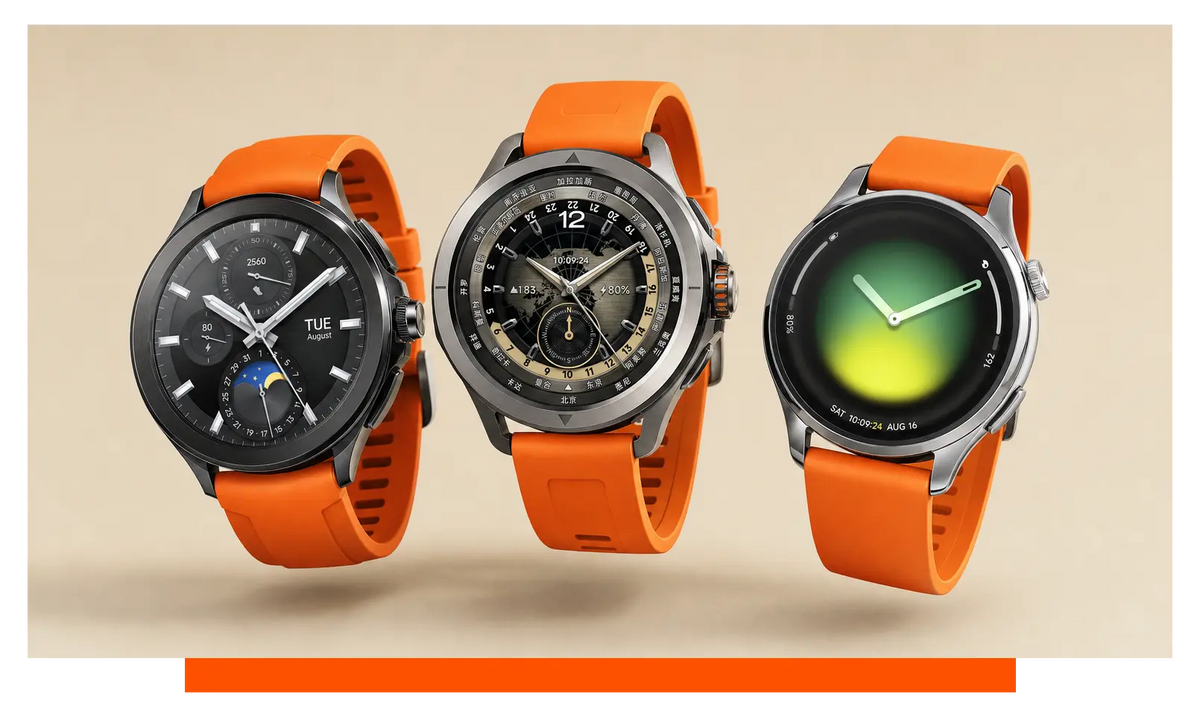


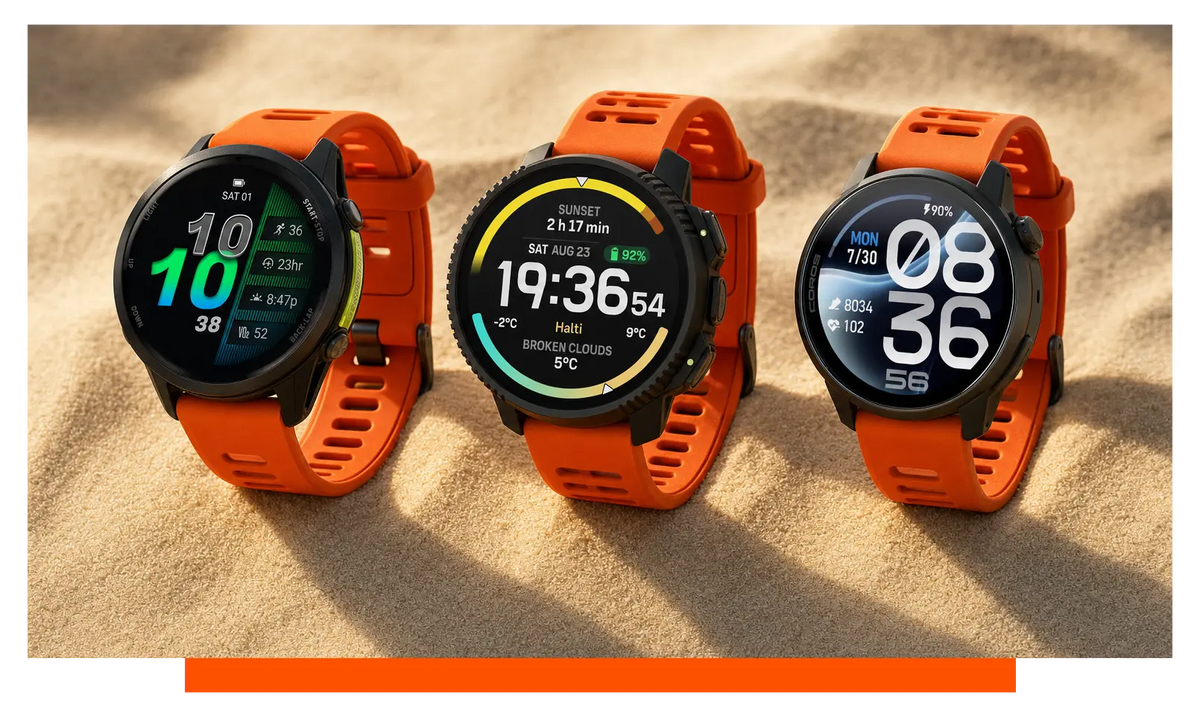
The Garmin Forerunner 970 is the best overall smartwatch for GPS and navigation because it can find destinations and change routes from your wrist. Choose the Suunto Vertical 2 instead when dependable navigation across long days, away from both your phone and a charger, matters more than creating a fresh route directly on the watch.
On this page
This page compares the navigation, GPS battery life and wrist fit that separate the strongest phone-free options.
- The best GPS and navigation smartwatches at a glance
- What makes a good GPS and navigation smartwatch
- Best overall - 1. Garmin Forerunner 970
- Best for multi-day treks - 2. Suunto Vertical 2
- Best for race training - 3. Coros Pace 4 Pro
- Best for outdoor training - 4. Polar Grit X2 Pro
- Best for hybrid training - 5. Amazfit Balance Ultra
- Which GPS watch should you choose?
- Frequently asked questions
The best GPS and navigation smartwatches at a glance
The Garmin Forerunner 970 offers the most useful combination of accurate positioning, offline maps and route changes made from the wrist, while the Suunto Vertical 2 trades some of that flexibility for much longer GPS running time.
| Smartwatch | Best for | Deciding spec | GPS accuracy | Offline maps | Route handling | GPS battery life | Case | Lens |
|---|---|---|---|---|---|---|---|---|
| Garmin Forerunner 970 | Running | Multi-band GPS | Multi-band GPS | Yes | On-watch routing | Up to 26 hours | Titanium | Sapphire crystal |
| Suunto Vertical 2 | Multi-day treks | Up to 65 hours | Dual-band GPS | Yes | On-watch routing | Up to 65 hours | Stainless steel | Sapphire crystal |
| Coros Pace 4 Pro | Race training | 60 hrs | Dual-frequency GPS | Yes | On-watch routing | 60 hrs | Titanium | Sapphire glass |
| Polar Grit X2 Pro | Outdoor training | Offline maps | Dual-frequency GPS | Yes | On-watch routing | Up to 43 hours | Stainless steel | Sapphire glass |
| Amazfit Balance Ultra | Hybrid training | Up to 30 days | Dual-band GPS | Yes | POI search | Up to 50 hours | Grade 5 titanium | Sapphire glass |
The deciding question is whether you need to create and change routes on your wrist, rather than simply follow one prepared before you leave.
What makes a good GPS and navigation smartwatch
A good navigation watch combines accurate positioning with the right kind of map guidance, enough battery for your longest outing and a case you can comfortably keep on your wrist.
GPS accuracy
Multi-band or dual-frequency GPS can use more than one satellite frequency, helping the watch hold a cleaner position around tall buildings, steep valleys and tree cover. That means fewer cut corners on a recorded run and a more trustworthy position marker when several trails meet.
The name varies by maker, but every watch here offers either multi-band, dual-band or dual-frequency positioning. Accuracy alone therefore does not settle the choice; what the watch can do with your position matters more.
Offline maps, breadcrumbs and on-watch routing
Offline maps show the roads, trails and terrain around you without mobile data, while breadcrumb navigation shows a loaded track or the line you have already travelled. On-watch routing goes further by creating or recalculating a route to a destination.
Breadcrumbs can be enough when you always prepare a trail beforehand. For an unfamiliar ride, run or hike where plans may change, offline maps paired with on-watch routing are much more useful. You can understand where you are, select somewhere new and respond without reaching for your phone.
GPS battery life
GPS battery life needs to cover the whole activity with a sensible margin, because map use, navigation prompts and frequent screen checks all add pressure during a long day.
The Garmin Forerunner 970 reaches up to 26 hours, whereas the Suunto Vertical 2 extends that to up to 65 hours. That difference is minor for a morning run but decisive on an ultra-distance event, an all-day trek or a trip between charging stops.
Case size, weight and strap fit
Case fit determines whether a watch stays comfortable and stable enough to wear for hours, particularly when a metal case and sapphire lens add weight.
The Garmin Forerunner 970 measures 47 x 47 x 12.9 mm and weighs 56 g. The Suunto Vertical 2 is larger and heavier at 48.6 x 48.6 x 13.5 mm and 87 g, so its battery advantage comes with a more substantial feel. The Amazfit Balance Ultra has a broad 51.8 x 51.8 mm case but weighs 57 g.
Strap choice can correct pressure and movement even when the case cannot change. The Garmin Forerunner 970 takes 22mm straps, while the Suunto Vertical 2, Polar Grit X2 Pro and Amazfit Balance Ultra use 22mm quick-release straps. Silicone, nylon, leather, Milanese and metal options are available for every watch in this shortlist, letting you favour sweat resistance, lower weight or a smarter everyday finish.
Best overall - 1. Garmin Forerunner 970
The Garmin Forerunner 970 is the best choice when you want to find a destination and alter your route without planning every step on your phone first.
- GPS: Multi-band GPS
- Navigation: Offline maps and on-watch routing
- GPS battery: Up to 26 hours
- Case: 47 x 47 x 12.9 mm; 56 g
- Price at the time of writing: £629.99
Its advantage is not simply that maps are stored locally. You can search nearby points of interest or a location name from the watch, making it easier to change lunch stops, find a landmark or recover from a wrong turn without rebuilding the outing on a phone.
The titanium case and sapphire crystal suit regular outdoor use, yet the weight remains easier to accommodate than the Suunto. That matters if you also want stable heart-rate tracking during runs or plan to sleep with the watch on.
It suits runners and mixed-sport athletes who want serious navigation but do not routinely spend several days away from a charger. Its 22mm fitting also gives you a wide choice of Garmin Forerunner 970 straps, including lighter nylon for long runs and silicone for wet, sweaty sessions.
Best for multi-day treks - 2. Suunto Vertical 2
The Suunto Vertical 2 is the stronger choice when long GPS endurance and dependable phone-free map access matter more than having the lightest watch.
- GPS: Dual-band GPS
- Navigation: Offline maps and on-watch routing
- GPS battery: Up to 65 hours
- Case: 48.6 x 48.6 x 13.5 mm; 87 g
- Price at the time of writing: £529
The long GPS ceiling is the reason to choose it. You can follow downloaded maps and use saved points of interest without maintaining a phone connection, which is a better fit for long hikes, ultra-distance events and trips where charging is uncertain.
Its AMOLED screen is generous at 1.5 inches with a 466 x 466 resolution, making map detail easier to inspect at a glance. The trade-off is physical: the stainless-steel watch weighs 87 g, so small wrists may notice it more during sleep or fast arm movement.
The quick-release fitting makes that easier to manage. Lightweight nylon is available for long outings, while silicone, leather, Milanese and metal Suunto Vertical 2 straps let the same watch move between wet trails and everyday wear.
Best for race training - 3. Coros Pace 4 Pro
The Coros Pace 4 Pro is best for race-focused athletes who prepare routes in advance and want long GPS running time with a bright map display.
- GPS: Dual-frequency GPS
- Navigation: Offline maps and on-watch routing
- GPS battery: 60 hrs
- Display: 1.47 inches; 466 x 466; 3,500 nits
- Price at the time of writing: £389
Its 3,500-nit AMOLED screen is the standout practical feature, keeping the route easier to read in strong daylight. Downloaded maps include location names, contours and points of interest, giving you useful context instead of a bare line across an empty screen.
The navigation experience is still most natural when your route has been created or uploaded beforehand. That makes the Coros a strong race-day and structured-training option, but the Garmin remains better when your priority is finding a new destination from the watch itself.
The titanium case and sapphire glass are paired with a choice of silicone, nylon, leather, Milanese and metal Coros Pace 4 Pro straps. Nylon is the practical match for long races because it lets you fine-tune tension as your wrist changes during the day.
Best for outdoor training - 4. Polar Grit X2 Pro
The Polar Grit X2 Pro is the best fit when outdoor navigation and training guidance carry similar weight in your decision.
- GPS: Dual-frequency GPS
- Navigation: Offline maps and on-watch routing
- Map coverage: North America and Europe
- GPS battery: Up to 43 hours
- Price at the time of writing: £649
Its detailed offline maps and support for selected or custom points of interest make it useful for planned outdoor sessions. It can also guide you back along your track or towards your starting point if conditions or fatigue force a change.
The stainless-steel case and sapphire glass give it a solid outdoor build, while the 22mm quick-release fitting makes comfort easier to tune. Silicone, nylon, leather, Milanese and metal Polar Grit X2 Pro straps are available; a softer option is sensible for training, while metal works better when the watch is worn away from the trail.
Best for hybrid training - 5. Amazfit Balance Ultra
The Amazfit Balance Ultra is the best match for mixed everyday and outdoor use when long general battery life matters more than the broadest on-watch route-creation toolkit.
- GPS: Dual-band GPS
- Navigation: Offline maps and POI search
- GPS battery: Up to 50 hours
- Daily battery: Up to 30 days
- Case: 51.8 x 51.8 mm; 57 g
- Price at the time of writing: £599.90
It supports downloaded maps, contour detail, imported routes and point-of-interest search, which is enough for planned hikes and occasional outdoor directions. Its straight-line return-to-start guidance is less suitable for navigating safely around rivers, cliffs or other obstacles, so it should not be treated as a substitute for a prepared route.
The Grade 5 titanium case keeps the broad watch relatively light, although its footprint will still feel substantial on a narrow wrist. It uses 22mm quick-release Amazfit Balance Ultra straps, with silicone, nylon, leather, Milanese and metal available. A close-fitting nylon strap is particularly useful for controlling a large case without adding much weight.
Which GPS watch should you choose?
Choose according to where your routes come from, how long you stay away from charging and how much watch you comfortably want on your wrist.
- If you want to create destinations or change direction from your wrist: choose the Garmin Forerunner 970.
- If you regularly spend long days or multiple days away from charging: choose the Suunto Vertical 2.
- If you prepare race routes in advance and value a very bright display: choose the Coros Pace 4 Pro.
- If recovery and outdoor training guidance matter alongside maps: choose the Polar Grit X2 Pro.
- If you want occasional outdoor navigation with long everyday battery life: choose the Amazfit Balance Ultra.
- If weight matters: favour the 56 g Garmin over the 87 g Suunto, provided its shorter GPS battery life covers your outings.
For most runners and active travellers, the Garmin Forerunner 970 is the most complete phone-free navigator. The Suunto Vertical 2 takes over when reaching the end of a long route matters more than creating a new one halfway through.
Frequently asked questions
Do I need a subscription to use maps or navigation?
No. These watches include their own mapping and navigation functions, although a separate route-planning service may apply its own membership or map-purchase terms.
Can I import GPX routes from Komoot, Strava or another route-planning app?
Yes. Garmin Forerunner 970, Suunto Vertical 2, Coros Pace 4 Pro, Polar Grit X2 Pro and Amazfit Balance Ultra can use imported routes, making a GPX export the practical way to move a planned course.
Can I download maps before travelling abroad?
Yes. Download the destination area and sync your routes before travelling; Polar Grit X2 Pro transfers are handled through a computer, while the other watches use their companion app or Wi-Fi map manager.
Can I navigate back to my start without loading a route first?
Yes. Garmin, Suunto, Coros and Polar can retrace or guide along recorded points, while Amazfit provides a straight line towards the start rather than a safe path around obstacles.
Can a GPS watch replace a satellite messenger in an emergency?
No. A GPS watch can record your location and guide you, but for trips beyond mobile coverage you still need a satellite messenger or a phone with a suitable emergency connection.